Bee Removal & Wasp Control in Kittitas County
Science-Driven Treatment for Active Nests
Bee removal in Kittitas County starts with identifying the insect, locating the nest, and assessing the risk around the property. Yellowjackets, paper wasps, hornets, and honey bees behave differently and may nest under eaves, inside wall voids, around garages and decks, in landscaping, or underground.
At Prosite, we provide residential and commercial pest control backed by nearly 15 years of service in Central Washington. Our licensed and insured professionals use science-backed methods to assess active nests and develop a treatment plan based on the species, nest location, accessibility, and use of the surrounding area.
Request help with stinging insects: call us today at (509) 478-1925, or contact us online to schedule your Bee and Wasp Control service.
Common Bees & Wasps in Kittitas County
Identifying the specific stinging insect on your property is the first step in selecting an appropriate response. Appearance, flight patterns, nest construction, and the location of insect activity can help distinguish one species from another.
Common stinging insects and nesting patterns include:
- Yellowjackets: These scavenging wasps may nest underground or inside concealed structural spaces. Activity can become more noticeable in late summer and fall, particularly around outdoor food, drinks, garbage, and fallen fruit.
- Paper Wasps: Paper wasps commonly build exposed, umbrella-shaped nests under eaves, overhangs, deck railings, and other protected surfaces. They may defend the area immediately around an active nest when disturbed.
- Hornets: Some hornets build enclosed paper nests in trees or protected structural areas. Because a nest may be elevated or difficult to access, approaching or disturbing it can increase the risk of defensive activity.
- Honey Bees: Honey bees are beneficial pollinators and shouldn’t be treated as interchangeable with wasps. A swarm or suspected colony requires identification before removal or treatment options are considered.
Traps and household sprays aren’t equally effective for every stinging insect. We assess the pest situation before selecting an approach, especially when activity leads underground, through an exterior opening, or into a wall void where the full nest can’t be seen.
Our Bee & Wasp Control Process
We tailor our process to the property rather than apply a single treatment to every nest. We consider insect activity, access points, nest placement, and risks to residents, employees, customers, children, and pets before recommending the next step.
Our property-specific service may include:
- Inspection and Identification: We identify the likely species, trace activity toward the nest, and evaluate whether it is exposed, underground, elevated, or inside a structural void.
- Targeted Treatment: Our licensed professionals use research-backed methods selected for the identified insect and nesting conditions. Treatment timing and precautions depend on access, activity, and the surrounding environment.
- Nest Removal: Physical nest removal may be appropriate when the nest can be accessed safely and site conditions allow it. Concealed nests and suspected honey bee colonies may require a different service plan.
- Exclusion Planning: We can identify structural vulnerabilities that may allow pest entry. Our exclusion and insulation services address applicable openings and building conditions without stating that future nesting cannot occur.
- Preventative Maintenance: Ongoing programs can include inspections and targeted pest management based on the property type, seasonal activity, and identified concerns.
We explain our methods, relevant precautions, and practical preventive measures throughout the service experience. This approach connects treatment of the immediate concern with a longer-term pest-management plan suited to the property.

Licensed Stinging-Insect Control for Local Properties
Since 2011, we have provided property-specific pest control for residential and commercial properties throughout Central Washington, addressing active concerns while supporting long-term prevention.
Our bee and wasp service is supported by:
- Science-Backed Methods: We select targeted methods according to the identified insect, nest location, property conditions, and reported activity rather than applying the same response to every situation.
- Licensed and Insured Professionals: Our professionals receive extensive training and stay current with pest-control advancements, treatment practices, and relevant precautions.
- Exclusion and Insulation Services: We can address applicable structural vulnerabilities associated with pest entry, including openings that lead into wall voids or other concealed spaces.
- Tailored Service Plans: We provide options for different property needs and budgets, including preventative maintenance and broader pest-management services.
- Transparent Communication: We explain the proposed methods, precautions, and preventive measures so you understand what the service involves.
The service plan may differ for a residence, rental property, business entrance, outdoor gathering area, or shared commercial space. We develop the plan around the actual nesting conditions and how people use the affected area.

Practical Steps After Bee & Wasp Control
After an active nest has been addressed, practical sanitation and exterior-maintenance habits can make a property less attractive to scavenging wasps. These measures support professional pest management, but they don’t replace an evaluation when an active nest or concealed insect traffic is present.
Useful prevention measures include:
- Secure Garbage Containers: Keep outdoor trash receptacles closed with tight-fitting lids and clean residue from the containers when needed.
- Clean Outdoor Dining Areas: Wipe down tables and remove spilled drinks, food scraps, and sticky residue after barbecues or outdoor meals.
- Remove Outdoor Food Sources: Pick up fallen fruit, animal waste, and other materials that may attract scavenging yellowjackets.
- Maintain Landscaping: Trim overgrown shrubs and branches around entrances, walkways, decks, play areas, and other frequently used spaces.
- Inspect Exterior Openings: Look for activity around eaves, foundations, vents, utility penetrations, siding gaps, and other openings where insects may enter or nest.
Sealing an opening without understanding where an active nest is located can create additional problems, particularly when insects are entering a wall void. Our exclusion services address structural vulnerabilities as part of a property-specific plan.
Common Bee & Wasp Control Myths
A widespread misconception is that knocking down a wasp nest with a broom will solve the problem. Disturbing an active nest may provoke defensive behavior, and removing the visible structure doesn’t necessarily address insects in a concealed colony.
Another dangerous myth is that gasoline, fire, or boiling water offers an appropriate way to treat an underground nest. Gasoline and fire-based methods create serious safety and environmental hazards, while improvised liquids may not reach the colony and can trigger increased activity near the opening.
It’s also incorrect to treat honey bees, bumble bees, yellowjackets, paper wasps, and hornets as interchangeable pests. We base treatment discussions on identification, nest placement, and risk. A suspected honey bee swarm or colony may warrant beekeeper assistance depending on available resources, while a suspected northern giant hornet sighting should be reported to Washington authorities rather than approached or handled.
Frequently Asked Questions
-
Do you provide wildlife control services in Spokane?No, we only offer wildlife control services to customers in Kittitas & Yakima counties.
-
Skunks
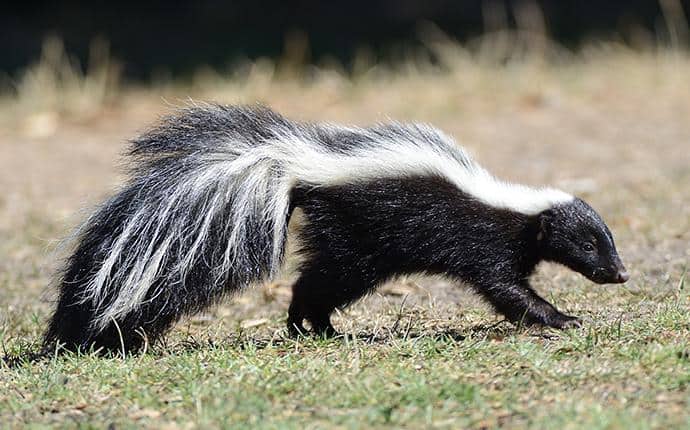
Their most unique feature is their black body which has a white stripe starting at their head and divides into two stripes that travel down their entire body and tail. But, their most identifiable characteristic is the extremely foul odor that skunks spray from glands found at the base of their tail as a defense mechanism. If sprayed directly into a person's or animal's eyes the spray can cause temporary blindness.
Adult skunks grow to between 20 and 30 inches in length, with their tail adding 7-15 inches to their total length. Adults weigh between 2.5 and 11.5 pounds (i.e. the size of a small housecat).
*Limited services available for skunks.
-
Raccoons
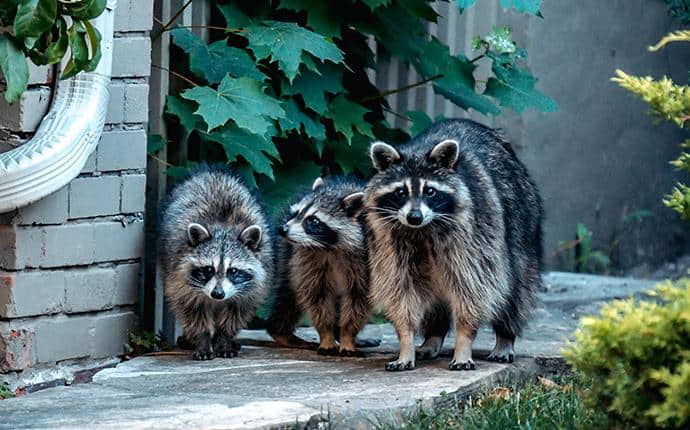
Raccoons have many easily recognizable physical features including a black “mask” of fur that surrounds their eyes, fluffy black and gray ringed tails, and a hunched appearance caused because their hind legs are longer than their front legs. Their bodies are covered in dense salt and peppered colored fur. Raccoons may grow to up to three feet in length and weigh between 10 and 30 pounds.