Commercial Pest Control in Yakima, WA
Customized Prevention Programs for Yakima Businesses
Pest activity can disrupt operations, damage inventory or equipment, and undermine the clean, safe environment employees and customers expect. At Prosite, we’ve provided commercial pest control services in Yakima since 2011, addressing both isolated activity and established infestations.
Our licensed and insured team uses science-backed, research-driven methods to develop customized programs for each facility we serve. Rather than applying a standard treatment and moving on, we build prevention-focused programs around your property’s specific pest pressures, operational needs, and industry requirements.
Call (509) 478-1925 to discuss a customized commercial pest control program for your Yakima facility.
What Are Signs You Need Commercial Pest Control Services?
Pest activity in a commercial building can affect employees, customers, inventory, equipment, and your building’s physical condition.
Look for these signs:
- Droppings, gnaw marks, or nests, especially in storage areas.
- Unusual odors or sounds, such as scratching in walls.
- Damage to inventory, packaging, or wiring caused by pests.
- An increase in pest sightings, particularly during business hours.
- Customer complaints about pests on your premises.
- Structural issues, such as sagging floors or holes in walls, which could signal termites.
Even limited signs of activity are worth a professional inspection. Early intervention can reduce the risk of an established population that’s harder to control and more disruptive to your operations.
What Pests Tend to Invade Commercial Buildings in Yakima?
Some of the most common pests that businesses in Yakima face include:
- Rodents: Mice and rats seek food and shelter in commercial spaces, using wall voids, storage areas, and structural gaps to move through a building. See our dedicated rodent control services.
- Ants: Odorous house ants are especially common and are drawn to food crumbs, spills, and moisture sources throughout a facility.
- Cockroaches: These pests thrive in damp, hidden areas like kitchens or storage rooms, and are commonly linked to food handling and waste conditions.
- Spiders: They often invade to prey on smaller pests. Learn about our Spider control services.
- Flies: Attracted to garbage, organic waste, and food residue, they’re a common issue for restaurants and food-adjacent businesses.
- Termites: These wood-destroying pests can create structural damage concerns that require professional inspection and treatment. Learn about our termite control solutions.

What Is the Process for Commercial Pest Inspections & Removal?
Although every program is tailored to the facility, our process generally includes:
- Initial Inspection: Our commercial technicians inspect facilities and grounds for pest activity, entry points, conducive conditions, and critical service points. We identify the conditions that attract insects and rodents and use those findings to shape everything that follows.
- Customized Plan: Based on our findings, we develop a targeted pest control strategy built around your facility’s pest pressures, industry regulations, and operational requirements.
- Treatment: Using science-backed methods, we treat existing pest activity and implement prevention measures intended to reduce the likelihood of its return. Where rodent exclusion is appropriate, we address the access points that allow entry in the first place.
- Follow-Up Services: Regular inspections and treatments support ongoing monitoring and pest management. Treatment methods and follow-up frequency are based on the pest, property conditions, and monitoring results over time.
- Documentation and Education: We document services performed, materials used, and pests observed so you have clear records for your operations. We also provide your team with practical guidance on sanitation practices, irrigation conditions, and how to report activity between visits.
Integrated Pest Management for Commercial Facilities
Our commercial service uses an Integrated Pest Management strategy, commonly referred to as IPM. IPM combines preventive practices, monitoring, and targeted control methods to manage pest populations systematically rather than through repeated chemical applications alone. The framework includes mechanical, physical, cultural, and biological controls, and our goal is to manage pest problems using the least amount of chemicals necessary.
The appropriate control method depends on the pest species, activity level, building conditions, and potential effects on occupants, products, and the environment. IPM is especially well-suited to commercial facilities where limiting pesticide use, protecting inventory, and maintaining documentation are ongoing priorities.
Commercial Pest Prevention Between Professional Visits
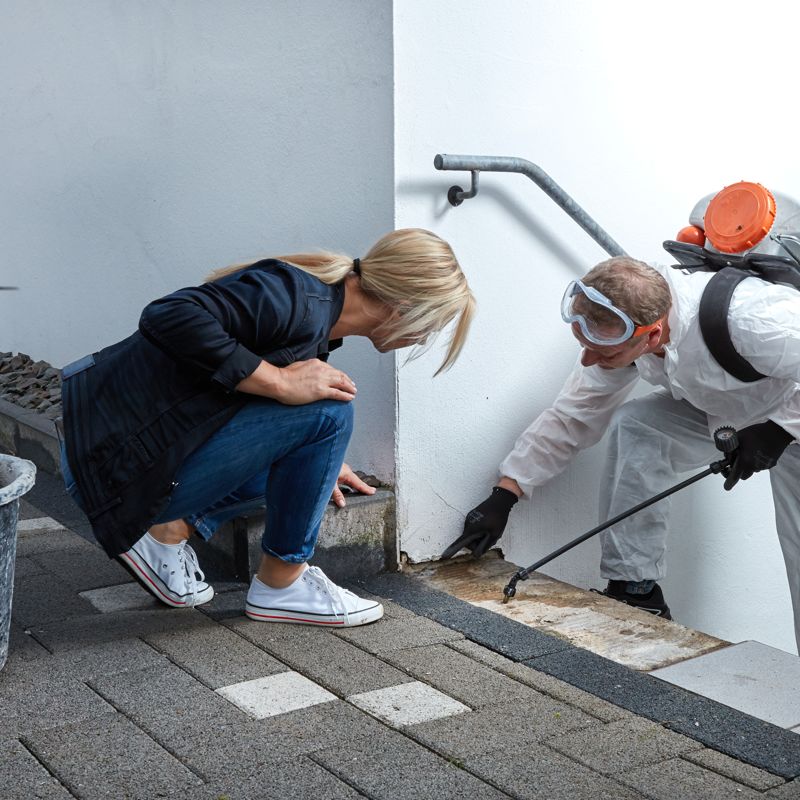
A professional service program is more effective when facility teams are active partners in prevention. Our technicians identify conditions that attract insects and rodents and share that information with your staff so corrective steps can happen between visits. Small, consistent actions across a facility can reduce the conditions that support pest activity between visits.
Sanitation & Waste Management:
Reducing food and water sources can help lower pest activity. Keep food storage areas clean and sealed, manage waste containers and collection schedules consistently, and address spills or organic buildup promptly. Flies, cockroaches, and rodents are all drawn to accessible food residue and improperly stored waste.
Storage & Clutter:
Cluttered storage areas provide shelter for rodents and insects. Pallets, boxes, and equipment stored directly against walls or on floors reduce visibility and create conditions where pest populations can grow undetected. Organizing storage and maintaining clear inspection lanes can support more effective monitoring.
Building Access Points:
Doors, vents, utility penetrations, loading dock areas, rooflines, and foundation gaps can all provide pest entry when they’re not properly maintained. Our exclusion services address these openings directly. Between visits, facility teams should report new gaps, damaged seals, or door sweeps that are no longer functioning.
Exterior Conditions:
Exterior irrigation, dense vegetation near the building, standing water, and poor drainage can all influence pest activity at the perimeter. We educate commercial teams on irrigation and landscaping practices that can help reduce conducive conditions near entry points and foundations.
Reporting & Communication:
When staff notice pest activity between scheduled visits, prompt reporting supports timely evaluation of the activity. Clear communication between your team and ours connects inspection findings, corrective actions, and follow-up observations over time, which is the foundation of a prevention-focused program.
Our customized programs connect inspections, targeted treatment, exclusion, documentation, and staff education to address current pest activity and the conditions behind it.
Call (509) 478-1925 or contact us online to discuss commercial pest removal and prevention for your Yakima facility.
Frequently Asked Questions
-
Do you provide wildlife control services in Spokane?No, we only offer wildlife control services to customers in Kittitas & Yakima counties.
-
Skunks
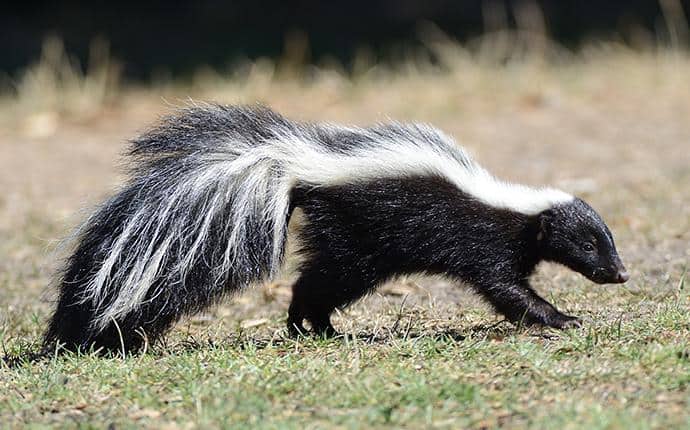
Their most unique feature is their black body which has a white stripe starting at their head and divides into two stripes that travel down their entire body and tail. But, their most identifiable characteristic is the extremely foul odor that skunks spray from glands found at the base of their tail as a defense mechanism. If sprayed directly into a person's or animal's eyes the spray can cause temporary blindness.
Adult skunks grow to between 20 and 30 inches in length, with their tail adding 7-15 inches to their total length. Adults weigh between 2.5 and 11.5 pounds (i.e. the size of a small housecat).
*Limited services available for skunks.
-
Raccoons
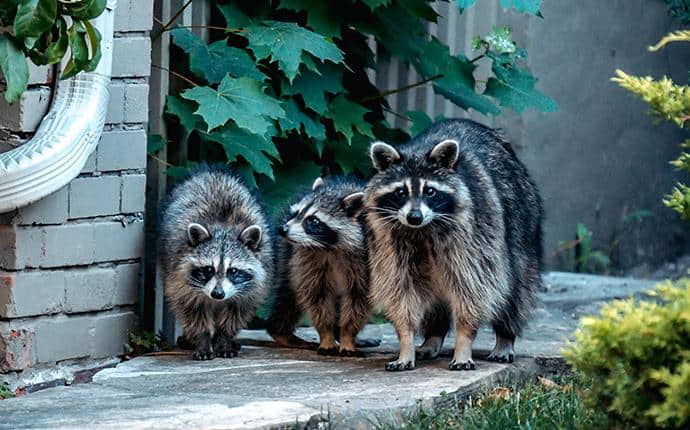
Raccoons have many easily recognizable physical features including a black “mask” of fur that surrounds their eyes, fluffy black and gray ringed tails, and a hunched appearance caused because their hind legs are longer than their front legs. Their bodies are covered in dense salt and peppered colored fur. Raccoons may grow to up to three feet in length and weigh between 10 and 30 pounds.